


Domande frequenti
Risposte su piattaforme di amplificazione, software e configurazione dei sistemi.
Piattaforme di amplificazione
1 domandaTipo di limiter: Rms, Peak e Clip
Per evitaredanni meccanicielegati alla temperaturaesistonodue tipi dilimiterutilizzabili:
- Limiter RMS:Protegge ildiffusoredai danni termici quandoviene applicata unapotenzaeccessiva per periodi prolungati, con conseguentesurriscaldamento, e infinebruciatura. I progettisti devono conoscere la massima potenza a lungo termine applicabile in sicurezza ai diffusori (AES power rating). Un approccio interessante alla limitazione RMS è quello che usa il controllo della temperatura della bobina osservando come cambia il picco della curva di impedenza quando il diffusore inizia a scaldarsi.
Infigura 3vediamo la relazione tra le curve di temperatura e di impedenza: la curva verde è quella misurata con il diffusore a 26°C, cioè freddo. La curva arancione è quella con la temperatura salita a 38°C. Si nota che quando il diffusore inizia a scaldarsi il picco di impedenza sale di valore e si sposta leggermente in frequenza. Poter monitorare in tempo reale le variazioni di impedenza permette quindi di salvare il diffusore. Conoscere a fondo i limiti del driver consente di mantenere la temperatura in un intervallo sicuro, e non solo per evitare danni.
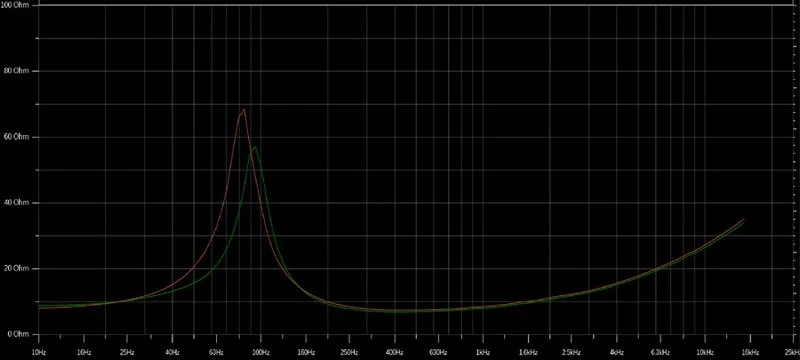
Curve di impedenza in tempo reale
- Peak e limiter: proteggono dai danni meccanici. I progettisti devono impostare i parametri di questi limiter in funzione sia del massimo spostamento (XMAX) della membrana del diffusore sia della sua massimatolleranza intensione.
NOTA: affidarsi al solo peak limiting per proteggere il diffusore può comunque portare a una potenza media a lungo termine eccessiva e ai danni che ne conseguono.